Table Of Content
Uneven air pressure can force air exchange between indoor and outdoor air, burdens your heating unit, and increases utility costs. Install volume dampers in the ducts to increase your control over air flow. Improperly designed or installed ductwork can lead to significant energy losses.

Air Leakage Prevention
Sealing duct joints, connections, and any gaps or cracks is crucial to prevent air leakage. By using appropriate sealing materials, such as mastic or foil tape, you can minimize energy losses and improve overall system performance. Insulating ductwork helps reduce noise transmission by absorbing sound waves. Adding insulation to the duct walls and lining can significantly reduce noise levels, creating a quieter indoor environment. It is important to select insulation materials with good sound-absorbing properties and ensure proper installation for maximum effectiveness.
Design the Return Air Duct
An optimized layout guarantees even temperature distribution and reduces pressure drops. Well-designed ductwork impacts HVAC efficiency, comfort, noise control, and longevity. The right layout, sizing, and materials are key to a harmonious indoor environment. Working closely with HVAC professionals is crucial for attaining the best possible ductwork design.
Water Heaters
Proper duct sizing is more than a technical necessity; it's a cornerstone for energy-efficient HVAC operation. Incorrectly sized ducts can lead to a myriad of problems, including inefficient energy use, increased operational costs, and compromised air quality. By understanding and implementing correct duct sizing, we can achieve a balance between system efficiency and comfort.
Ductwork refers to the system of tubes that distribute air from the HVAC unit throughout a building. It's a critical component for delivering conditioned air to different areas efficiently and effectively. Here you can see both of the values we calculated fall between vales listed in the table so we need to perform a bilinear interpolation.
Airflow should be closely balanced, with as much air delivered as gets routed back to the HVAC equipment. Otherwise the pressure differential will result in unwanted air loss or gain via air leaks in exterior walls. Leaks or cracks in the ductwork can also impact how much you spend each month on utilities. Up to 20 percent of your conditioned air is lost before it ever reaches its destination.
2022 Dealer Design Awards: HVAC Residential Controls - ACHR NEWS
2022 Dealer Design Awards: HVAC Residential Controls.
Posted: Sat, 30 Jul 2022 07:00:00 GMT [source]
As a reminder, you need to identify the size and type of the grille/diffuser before this step. Otherwise, you don’t know how many numbers of grille/diffuser you need for each room. Whether you’re stopping for a beer before the game or looking for some late-night tacos, assistant Food editor Danielle Dorsey has covered all the bases.

To do this make sure you start at the main duct which is furthest away. Then we just add up the volume flow rates for all the branches downstream of this. For D that’s just the sum of L I and F and for duct A its then the sum of L, I, F and C. The first thing we need to do is calculate the heating and cooling loads for each room.
Techniques such as using anemometers or flow hoods can accurately measure airflow at supply and return registers. By identifying any imbalances, you can adjust dampers and registers to achieve the desired airflow. Proper airflow balancing ensures that each room or zone receives the right amount of conditioned air. This involves adjusting dampers and registers to achieve the desired airflow. By carefully balancing airflow through the duct system, you can maintain consistent temperatures and prevent hot or cold spots.
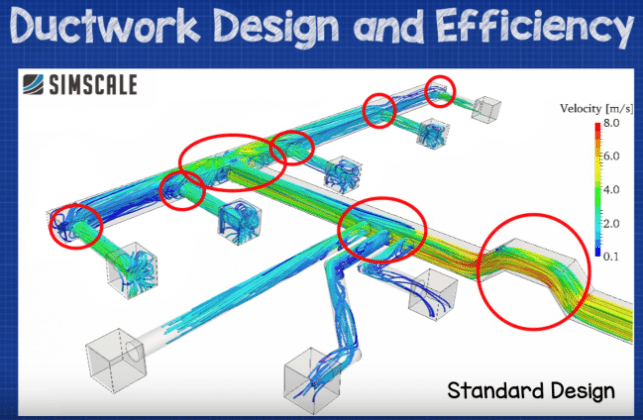
Fittings in the ductwork, such as bends and T-sections, can impact air flow. Using smoother fittings and avoiding abrupt turns can significantly enhance the efficiency of the duct system. Advanced tools like Computational Fluid Dynamics (CFD) simulations are used to optimize duct design. These simulations analyze air flow patterns and identify areas for efficiency improvements. A typical duct system includes air handlers, filters, and various types of ducts. Each component plays a vital role in the distribution and quality of air.
I prefer to use end caps because they are cheaper and faster to build. Basically, you need the duct to be tall enough to open a duct collar for a flexible duct connection. For instance, if the diffuser neck size is 150mm (6″), the flexible duct size is also 150mm (6″) and therefore, the duct height needs to be 200mm (8″) in order to fit the flexible duct. That’s why Emmely Avila created Los Angeles Friends (LAF), a group that invites Angelenos to branch out and meet new people. Over a year ago, she took her expressed her feelings of loneliness and her wanting to expand her social circle to TikTok.
Although you are most likely fine with the external static pressure, it is good to double check just in case you stretched the duct too long. By guiding the height of the main duct, your ceiling height can be higher. Although square-shaped ducts are cheaper, they occupy more ceiling space and low ceiling height will make your home feel dark and cramped. The living room has a floor area of 300 sqft and the capacity needed is 9000 BTU. To calculate the airflow requirement for the living room, divide 9000 BTU by 30 and the result is 300 CFM.
Insulating ducts located in unconditioned spaces, such as attics or crawl spaces, prevents energy losses due to temperature differentials. By reducing energy losses, you can optimize the efficiency of the HVAC system and lower energy consumption. This section will focus on the relationship between ductwork design and energy consumption, highlighting methods to minimize energy losses, improve system efficiency, and reduce utility costs.
Excessive noise can lead to discomfort, stress, and even health issues for occupants. A quiet system is indicative of proper functioning and optimal performance. But if you have issues with your ductwork, your HVAC system will never be great. And a shorter lifespan for your equipment, leading to things like expensive repairs in the first 5-10 years.


No comments:
Post a Comment